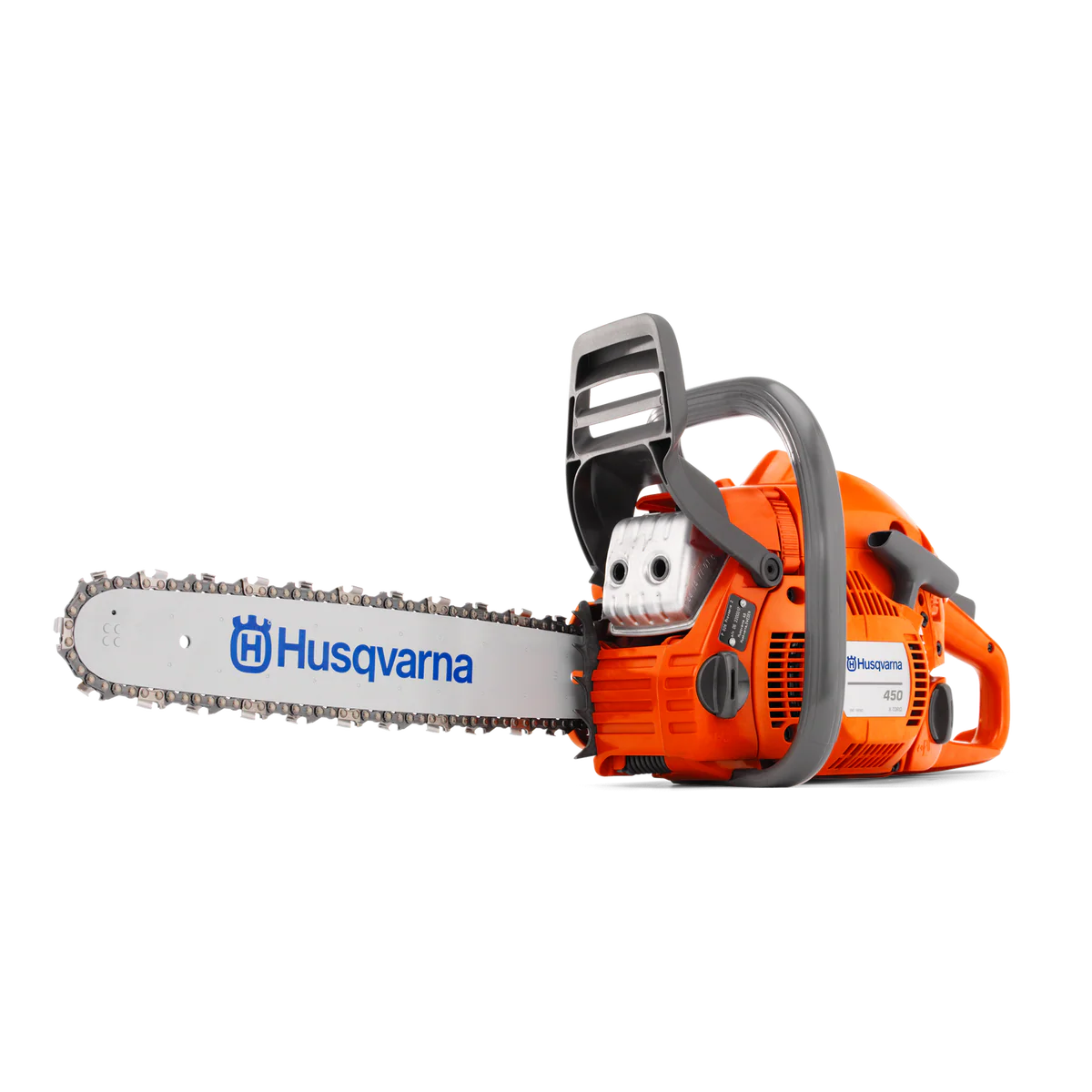
A good saw earns trust in the first hour, not the first month. The Husqvarna 450 Rancher Chainsaw is getting attention because it sits in the useful middle: stronger than a light weekend cutter, easier to manage than a full forestry saw, and priced within reach for many serious American property owners. That is the real pull. You may not be dropping timber every day, but storm cleanup, firewood, fence-line clearing, and rural acreage work can make a small saw feel tired fast.
For readers tracking outdoor power equipment updates, this model stands out because it gives buyers a professional chainsaw option without pushing them into the weight, cost, and upkeep of a true logging-class machine. Common retail listings show the 450 Rancher with a 50.2 cc engine, 3.2 HP rating, and 20-inch bar setup, which explains why homeowners with heavier cutting needs keep comparing it to larger saws.
Why the Husqvarna 450 Rancher Chainsaw Fits the Professional-Option Conversation
The professional label gets thrown around too easily in power tools. A saw is not professional because the box says it can cut firewood. It earns that talk when it handles long workdays, awkward cuts, dirty bark, cold starts, and a tired operator who still needs the last log bucked cleanly. That is where this model has found its lane.
Power That Makes Sense for Real Property Work
A 50 cc saw is not the biggest machine in the shed, and that is part of the point. Many American buyers do not need a giant timber saw. They need enough power to cut oak limbs after a storm in Missouri, split a winter stack in Pennsylvania, or clear pine blowdown beside a gravel drive in North Carolina.
That is where the 450 Rancher feels more serious than a casual yard saw. A gas chainsaw for firewood has to keep its chain speed under load. It cannot bog every time the bar gets buried in damp hardwood. Retail specs around the 50.2 cc and 3.2 HP class place this saw above light pruning tools while still keeping it friendly enough for a skilled homeowner.
The non-obvious part is that more power is not always the safer choice. A heavier saw can wear out your arms, slow your reactions, and tempt you into bad stance because you are fighting the machine instead of guiding it. A balanced mid-size saw often helps you work cleaner.
Why the 20-Inch Setup Hits the Sweet Spot
The 20-inch chainsaw category has a strange advantage. It looks big enough to take seriously, yet it does not feel as punishing as a 24-inch setup when you are limbing, bucking, and carrying it from one cut to the next. For many rural homeowners, that balance matters more than raw size.
A 20-inch bar also helps when the tree is awkward but not huge. Think about a maple limb across a driveway after a spring storm. You may need reach, but you also need control while stepping around branches, gravel, and uneven ground. A shorter bar might force extra cuts. A longer bar may feel clumsy.
That middle ground is why the saw keeps showing up in serious buyer conversations. It lets you move from cleanup to firewood without swapping machines. For people building a seasonal storm cleanup tool list, that flexibility matters.
Where It Beats Smaller Homeowner Saws
Plenty of smaller chainsaws make sense for pruning, thin limbs, and light seasonal trimming. They are easier to start, easier to store, and less tiring. But the moment the job turns into hours instead of minutes, the weakness shows. You do not notice it on the first cut. You notice it on the twentieth.
Firewood Cutting Rewards Torque, Not Hype
Firewood exposes weak saws fast. Dry pine is forgiving. Green oak is not. If your saw loses speed every time the chain meets pressure, the work gets slow and sloppy. You start pressing harder, the chain heats up, and the cut becomes more about force than rhythm.
That is why a gas chainsaw for firewood remains attractive even as battery models keep improving. Battery saws are excellent for quick cuts and quiet neighborhoods, but repeated firewood work still favors a gas saw when runtime, refueling speed, and cold-weather output matter. The 450 Rancher lands in that space without asking buyers to pay for a full commercial rig.
The surprise is that the best firewood saw for many households is not the strongest one they can afford. It is the strongest one they can still control near the end of the pile. That last detail separates a smart purchase from a brag purchase.
The Rancher Identity Matches American Use
The word “rancher” is not only branding. It describes a type of user: someone who may not cut for a living, but still needs a saw that can work hard when weather, land, or livestock issues create a mess. That could be a cattle owner in Texas clearing mesquite, a small farm family in Iowa cutting windfall, or a cabin owner in Maine preparing shoulder-season firewood.
This is where the model’s popularity makes sense. It speaks to buyers who live between weekend chores and paid tree work. They are not arborists. They are not loggers. Yet their needs are too demanding for a light-duty saw that was built mainly for tidy suburban branches.
That middle identity is valuable. It gives the saw a larger audience than a niche pro model and more credibility than a bargain tool. For many buyers, that is enough reason to compare it against other best gas tools for rural property care.
The Professional-Option Label Comes With Limits
Calling this a professional chainsaw option does not mean it should replace every true pro saw. That distinction matters. A contractor who cuts daily, runs long bars, and works in large timber may want a more aggressive machine. The Rancher appeal is different. It gives non-commercial users a serious step up without dragging them into the full cost and size of a logging setup.
It Is Not a Shortcut Around Skill
A stronger saw does not make a new operator ready for dangerous work. It can do the opposite. More chain speed, more reach, and more bite mean mistakes happen faster. That matters when cutting storm-damaged limbs, leaning trees, or trunks under tension.
OSHA guidance for chainsaw operation stresses basics like secure footing, both hands on the handles, clearing obstacles, avoiding overhead cuts, and using the brake or shutting the saw off when carrying it over distance or rough ground. Those rules sound simple until the work area is full of brush and fatigue.
That is why buyers should pair any 20-inch chainsaw with training, chaps, eye protection, hearing protection, gloves, boots, and patience. The saw may feel ready for bigger work before the operator is. That gap is where accidents live.
Maintenance Decides Whether It Feels Pro
A chainsaw’s reputation often gets blamed on the engine when the real issue is chain care. A dull chain makes a strong saw feel weak. Bad fuel makes starting miserable. Dirty air filtration can turn a clean-running machine into a temperamental one.
This is where the 450 Rancher’s professional-style appeal comes with a trade. You are buying a machine that rewards attention. File the chain. Check bar oil. Clean around the clutch cover. Watch chain tension after heat cycles. Use fresh fuel. None of this is glamorous.
But it is the whole story.
A buyer who wants a no-fuss tool for ten-minute jobs may be happier with a smaller battery saw. A buyer who enjoys keeping tools sharp and ready will get more from this model. The saw becomes better as your habits improve.
Why Demand Keeps Building Around This Class
The rise of this saw is not only about brand loyalty. It also reflects how Americans are using property tools now. More people want to handle their own storm cleanup. More rural homeowners are managing wooded acreage. Firewood remains a practical backup heat source in many colder states. At the same time, prices on full pro saws can be hard to justify for part-time use.
Buyers Want One Saw That Covers Most Jobs
Tool buyers hate owning five machines when one good one can handle most of the work. That is the 450 Rancher’s strongest argument. It can prune larger limbs, buck logs, cut firewood, and manage storm debris without feeling wildly oversized for every task.
A 20-inch chainsaw also fits the psychology of preparedness. After one bad storm, many homeowners stop thinking of a saw as a yard tool and start seeing it as household equipment. If a tree blocks the driveway at 6 a.m., waiting for a crew may not be an option.
The counterintuitive part is that demand often rises after people buy the wrong saw first. A light model teaches them what chainsaws can do, then shows them where it falls short. The second purchase is usually more honest.
Price Position Makes It Easier to Defend
Professional saws can be hard to justify when you only cut a few heavy weekends each year. Cheap saws can be hard to trust when the work involves hardwood, storm damage, or remote property. The Rancher class sits between those worries.
That does not mean it is cheap. It means the value argument is easy to understand. You pay for extra engine size, reach, and build confidence without crossing into machines meant for daily forestry crews. For a homeowner who heats partly with wood, that cost can feel practical.
Retail availability also shapes buyer behavior. When a model appears across major stores, people can compare specs, shipping, service options, and replacement chains without hunting through specialist channels. That access feeds popularity as much as performance does.
Conclusion
The smartest saw purchase is rarely the loudest one. It is the one that matches your land, your wood, your strength, and your patience for upkeep. That is why this model is pulling attention from serious homeowners, farm owners, and firewood cutters who want more than a light weekend tool.
The Husqvarna 450 Rancher Chainsaw makes sense because it gives buyers a credible professional chainsaw option while staying close to real household use. It has enough size to feel capable, yet it does not push most owners into an overbuilt machine they will dread using.
Still, the saw is only half the decision. The other half is whether you will sharpen, fuel, clean, store, and operate it with respect. Match the tool with good habits, and it can become one of the most trusted machines in the shed. Buy it for image alone, and it will expose you fast.
Choose the saw that fits the work, then treat every cut like it matters.
Frequently Asked Questions
Is the Husqvarna 450 Rancher good for professional use?
It can handle serious property work, firewood, and farm cleanup, but it is better viewed as a heavy-duty landowner saw than a full-time logging saw. Daily commercial cutters may prefer a higher-output professional model built for longer bars and constant production.
What size bar comes on the 450 Rancher?
Most common U.S. retail listings pair it with a 20-inch bar. That size gives strong reach for firewood and storm cleanup while staying easier to handle than longer setups used on larger timber saws.
Is a 20-inch chainsaw too much for a homeowner?
It depends on the work. For pruning small branches, yes, it may be more saw than needed. For rural property, firewood, fallen trees, and larger limbs, a 20-inch chainsaw can be a practical size when used with proper safety gear.
What kind of fuel does the 450 Rancher use?
It runs on a two-stroke gas-and-oil fuel mix. Owners should follow the manual for the correct ratio and use fresh fuel. Old gas is one of the fastest ways to create hard starting and poor performance.
Can the 450 Rancher cut hardwood?
Yes, it can cut hardwood when the chain is sharp and the saw is maintained. Dense woods like oak, hickory, and maple demand patience. Let the chain do the work instead of forcing the bar through the cut.
Is it better than a battery chainsaw?
For long firewood sessions and repeated heavy cuts, gas still has an edge in runtime and refueling speed. Battery saws are cleaner, quieter, and easier for quick work, but they may need extra batteries for demanding jobs.
What safety gear should I use with this saw?
Use chainsaw chaps, eye protection, hearing protection, gloves, sturdy boots, and a helmet when overhead debris is possible. Also read the manual before cutting. A powerful saw rewards care and punishes careless handling.
Who should not buy this chainsaw?
Someone who only trims small branches a few times a year may be better served by a lighter saw. It also is not ideal for buyers unwilling to sharpen chains, mix fuel, check bar oil, and follow safe cutting habits.